The VIF® programme aims to support children’s health and wellbeing, prevent obesity and reduce social inequalities in health related to diet and physical activity.
To assess the impact of the VIF® approach on children’s health, weight and height measurements (BMI1) are collected independently in the same municipalities, schools and age groups by school doctors and nurses within the relevant education authorities. The data are then processed and analysed by FLVS, which reports the results back to the participating municipalities.

Analysis of the measurements shows a positive impact of the initiatives on childhood overweight and obesity, including among more socially disadvantaged groups.
In recent years, the prevalence of childhood overweight and obesity appears to have stabilised nationally. However, recent reports2 have highlighted increases among children from lower-income backgrounds.
In VIF® municipalities, by contrast, recorded figures differ from national averages and show a clear decline in the prevalence of overweight and obesity among primary-school children, including in priority education areas. These encouraging results reinforce the programme’s focus on reaching socially vulnerable families.
Evaluating community health initiatives is essential to improving and adapting them over time. In addition to BMI monitoring, VIF® uses a second evaluation framework to measure how initiatives delivered in VIF® municipalities affect children’s behaviour.
This methodology was developed in partnership with Université Lille 2 and was designed to be practical for field use while meeting the expectations of public-health professionals, elected representatives, local authorities and researchers.
Two questionnaires were developed — one for children from around age 8 onwards and one for parents — as part of a research project led by Professor Monique Romon, Université Lille 2.
The questionnaires cover children’s:
The first stage assessed whether the data-collection methodology was feasible and whether the questionnaires captured relevant and usable information.
Sample: four schools were included, covering different geographical areas, priority and non-priority education zones, public and private schools, and different year groups.
This stage tested whether the child and parent questionnaires produced consistent results when administered twice.
The same participants completed the questionnaires twice, two to three weeks apart.
Sample: 198 child questionnaires and 130 parent questionnaires were analysed.
This stage tested the questionnaires’ ability to detect behavioural changes following implementation of the initiatives.
A total of 306 child questionnaires were collected, representing 153 children assessed twice.
Note: the findings were intended for scientific publication.
The questionnaires are now available to VIF® municipalities.
Evaluation is a core component of the VIF® approach and supports continuous co-design and improvement. The national coordination team therefore evaluates the quality of its training programmes, tools and overall methodology on an ongoing basis.
Training is one of the programme’s main ways of supporting local stakeholders and providing them with a reliable framework and practical expertise. Courses are developed for each programme theme and are offered continuously to participating municipalities. They are delivered locally by the national coordination team.
Total number of training sessions per year
| 2012 | 2013 | 2014 | 2015 | 2016 | Total |
| 10 | 54 | 39 | 59 | 60 | 222 |
Number of professionals trained
| 2012 | 2013 | 2014 | 2015 | 2016 | Total |
| 200 | 935 | 631 | 701 | 835 | 3,302 |
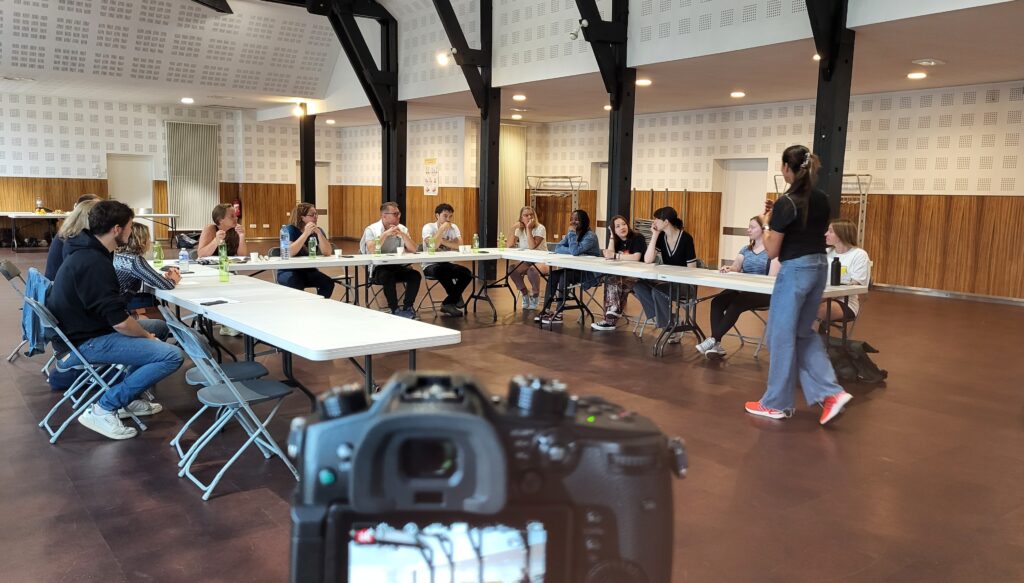
As its training offer has expanded, VIF® has trained 3,302 professionals through 222 sessions. The diversity of topics attracts a broad range of participants, including childcare professionals and after-school activity leaders.
Participants rated the training very positively, with average scores of 8.7/10 for relevance and 8.9/10 for both content and clarity. The theoretical and computer-based practical sessions were particularly appreciated. Participants also asked for more opportunities to apply the learning by designing questionnaires tailored to local issues; this feedback was incorporated into subsequent sessions.
The training was rated highly for relevance, content and clarity, with average scores of 8.6/10, 8.7/10 and 8.9/10 respectively. Participants frequently highlighted the value of the knowledge provided. They also asked for more practical workshop time, so the training was subsequently adapted to include a stronger practical component.
Average scores reached 8.6/10 for relevance and content, and 8.8/10 for clarity. Participants particularly valued the concept and practical use of Playdagogie games. Feedback also showed that some activities were not suitable for younger children, so the programme adapted them by replacing text-heavy instructions with illustrations.
For each new theme, VIF® develops two types of resources with subject-matter experts and makes them available to municipalities and local professionals:
A comprehensive evaluation framework, adapted to each theme, has been developed so that VIF® municipalities can measure the impact of their initiatives and use the findings to guide future action.
Whenever a new theme is introduced, the resources are presented to project leads during continuing training. Their relevance is also assessed with professionals after each training session.
VIF® resources are developed in line with official recommendations. Some public-facing materials have also been reviewed or endorsed within French national public-health programmes such as the PNNS (Programme National Nutrition Santé – Manger Bouger) and the PNA (Programme National pour l’Alimentation).
These endorsements highlight the value of the resources and support the validity of the health messages they convey.
EXAMPLE: EVALUATION OF THE VIF® “SLEEP” THEME
User satisfaction with the “Sleep” resources was assessed in 2016 when the theme was presented during continuing training for project leads. A total of 180 post-training questionnaires, rating the resources from 1 to 10, were also analysed.
Project leads and professionals rated all three types of sleep resources very positively, describing them as both clear and engaging.
[pdf_embed url= »https://vivonsenforme.org/wp-content/uploads/2022/05/ASPIRE_livre_blanc_VF.pdf »]